
How to Stay Relevant in an Agentic AI World: Audit Your Work, Not Your Job Title
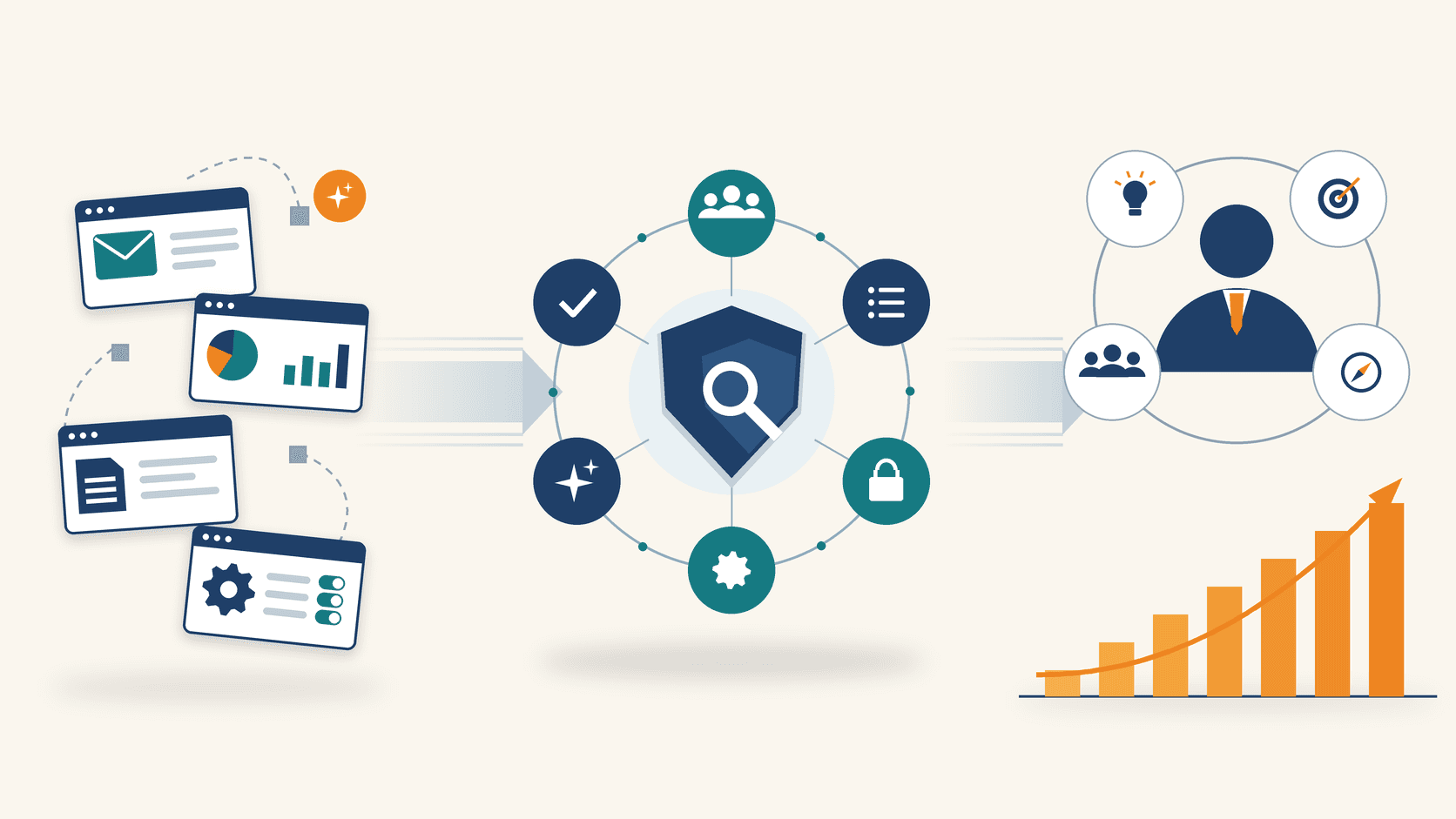

AI agents are replacing tasks before jobs, and the data so far hits entry-level hiring hardest. Staying relevant means sorting your work into three piles: hand over, supervise and own. Klarna and Salesforce show what goes wrong, and what remains, when support work moves to agents.
In February 2024, Klarna announced that its AI assistant was doing the work of 700 full-time customer service agents. Fifteen months later, its CEO was telling Bloomberg the company was hiring people again. Both statements were true, and the distance between them is worth studying if you want to stay relevant in an agentic AI world.
An AI agent differs from a chatbot in one way that matters: you give it a goal, and it works through the steps itself using connected software. That makes “Will AI take my job?” too broad to act on. A better question is which parts of your work an agent should do, which you should supervise, and which must stay yours.
What the Evidence Says Is Happening
The strongest data comes from Stanford researchers using ADP payroll records for millions of US workers through June 2026. They found no evidence of widespread, economy-wide job displacement. Yet employment of 22 to 25 year olds in AI-exposed occupations now sits 19% below where it would be had it kept pace with less-exposed peers, mostly because of reduced hiring rather than layoffs.
The detail to carry into your planning is where the declines fall. They concentrate in occupations where AI mainly substitutes for human tasks. Where AI mainly complements workers, employment is flat or rising, especially for experienced people. The authors treat these as early indicators, not proof of cause.
Agents are also far from settled. Gartner predicts over 40% of agentic AI projects will be canceled by the end of 2027 because of cost, unclear value or weak risk controls, yet projects that agents will make at least 15% of day-to-day work decisions by 2028. That mix creates demand for people who can tell a working agent from an expensive one.
The Hand Over, Supervise, Own Framework

Sort your tasks, not your role, into three piles. The aim follows from the Stanford split: move your time toward work AI complements.
Hand over
This pile holds repetitive, rule-based work where a mistake is cheap and easy to reverse, such as status updates, data pulls and first replies to common questions. Learn to set agents up here, using builders such as Microsoft Copilot Studio or Salesforce Agentforce, or frameworks such as LangGraph if you code.
Supervise
Here the agent does the work and you check it, because the stakes are higher. The core skill is evaluation: defining good output, sampling results and tracing failures to a cause. Tools such as LangSmith record what an agent did at each step. Track rework rate, escalation rate and end-to-end cycle time, not just minutes saved.
Own
Someone must answer for this work: decisions with legal or financial weight, client relationships and unusual cases. In the World Economic Forum’s 2025 survey, analytical thinking was cited as a core skill by nearly 70% of employers and leadership and social influence by 61%.
Case Study: Klarna and Salesforce in Customer Support

All figures below are company-reported.
| Klarna | Salesforce | |
|---|---|---|
| Reported result | OpenAI-powered assistant: 2.3 million conversations in month one, two-thirds of chats; resolution time under 2 minutes, down from 11; repeat inquiries down 25% | Agentforce on its help site: about 1.5 million conversations, with satisfaction scores “about the same” as human support |
| Effect on people | Work equal to 700 full-time agents, per the February 2024 release | Support headcount down from about 9,000 to about 5,000, which CEO Marc Benioff called a “rebalance”; hundreds redeployed to sales, professional services and customer success |
| What came next | By May 2025 the CEO described chatbot output as cheaper but lower quality, and Klarna began hiring humans again | Remaining staff work alongside agents, coordinated by an “omnichannel supervisor” |
| Limitation | Figures are self-reported and not independently audited | No official filing confirms the cut, and the timeframe is unclear |
Klarna’s early numbers mostly measured speed, and the quality problem surfaced later. That is what handing over too much looks like: work that needed supervising was treated as finished.
Salesforce carries a harder lesson. Thousands of support roles went and hundreds of people were redeployed, so moving sideways was not guaranteed. In both companies, what stayed with people was oversight, complex cases and customer relationships.
A Five-Point Relevance Diagnostic

| Check | Ask yourself | Red flag |
|---|---|---|
| Task map | Have you sorted last week’s tasks into the three piles in writing? | “My job is too varied to break down” |
| Hands-on use | Have you run an agent on real work in the past 90 days? | You have only watched demos |
| Evaluation | Can you catch a wrong output before it reaches a customer? | You find errors only when someone complains |
| Measurement | Do you report results as rework, cycle time or customer satisfaction? | Your only metric is time saved per task |
| Ownership | Is there a decision or relationship you personally answer for? | All your output is a draft for someone else |
Rule of thumb: with two or more red flags, fix the one nearest the top first, because the later checks depend on it.
What This Means for Careers and Leadership
Early career. With entry-level hiring narrowing, a list of tools may not be enough. Show evidence from the supervise pile: an agent you tested, the errors you found and the check you added.
Mid-career. Knowing how the business really works is what makes evaluation possible. Microsoft’s 2025 Work Trend Index found 36% of leaders expect to manage agents within five years, against 21% of employees, so this shift is more visible from the top.
Leaders. Decide how you will measure quality before an agent goes live, and name the person who answers for it.
Employers expect 39% of workers’ core skills to change by 2030, according to the World Economic Forum, so repeat this audit rather than completing it once. Structured upskilling, such as Accredian’s executive and professional programmes, can help with the two harder piles, where practice and feedback matter more than reading about tools.
Conclusion
Open last week’s calendar and label each task hand over, supervise or own. Then run one hand-over task through an agent and write down every place it went wrong. That list is your first evaluation checklist.
FAQs
Will agentic AI replace my job?
US payroll data shows no broad displacement so far, but the risk is uneven. It depends on how much of your work AI can do without you versus how much it makes you better at. Watch the share of your week spent on the first kind.
What is the difference between generative AI and agentic AI?
Generative AI produces content when you ask, such as a draft or a summary. Agentic AI pursues a goal over several steps and can act in other software. Many agents use generative models underneath, but an agent’s mistakes can trigger actions, not just bad text.
Do I need to code to work with AI agents?
Not for most business roles. Low-code builders let non-developers configure agents, and evaluation depends more on subject knowledge than programming. Coding helps if you want to build custom agents. Comfort with reading data and spotting a wrong number is the more common requirement.
Which agentic AI skills should I learn first?
Start with breaking a process into clear steps, since an agent can only follow what you can specify. Next, learn to write test cases and review results against them. Then learn how permissions and approvals work, which decide what an agent may do unattended.
More Articles to Read
AI-Ready Leadership: 5 Analytics Skills to Turn AI Pilots into Results
AI-ready leaders don’t need to code. They need five analytics skills: framing decisions, reading data critically, judging model output, redesigning workflows, and measuring outcomes. Klarna’s customer service AI shows why: strong efficiency numbers came first; the CEO later admitted quality had slipped. In February 2024, Klarna reported that its OpenAI-powered assistant had handled 2.3 million […]
Leadership in the AI Era: What Changes for Leaders
Widespread AI adoption is changing what leaders are responsible for, how they make decisions, which tasks they delegate and which skills matter most. Leadership is shifting from directing tasks to designing how people and AI work together, with judgement, accountability and continuous learning at its centre. Introduction A common assumption in leadership meetings is that […]
Leading Teams in the Age of AI Co-Workers: A New Approach to Leadership
AI is moving beyond individual productivity tools to become an active participant in business operations. Leading AI teams now requires managers to coordinate human expertise and digital co-workers, redesign workflows, establish accountability, and develop employees who can effectively delegate, supervise and collaborate with AI. Introduction: When AI Becomes Part of Your Team A team member […]
